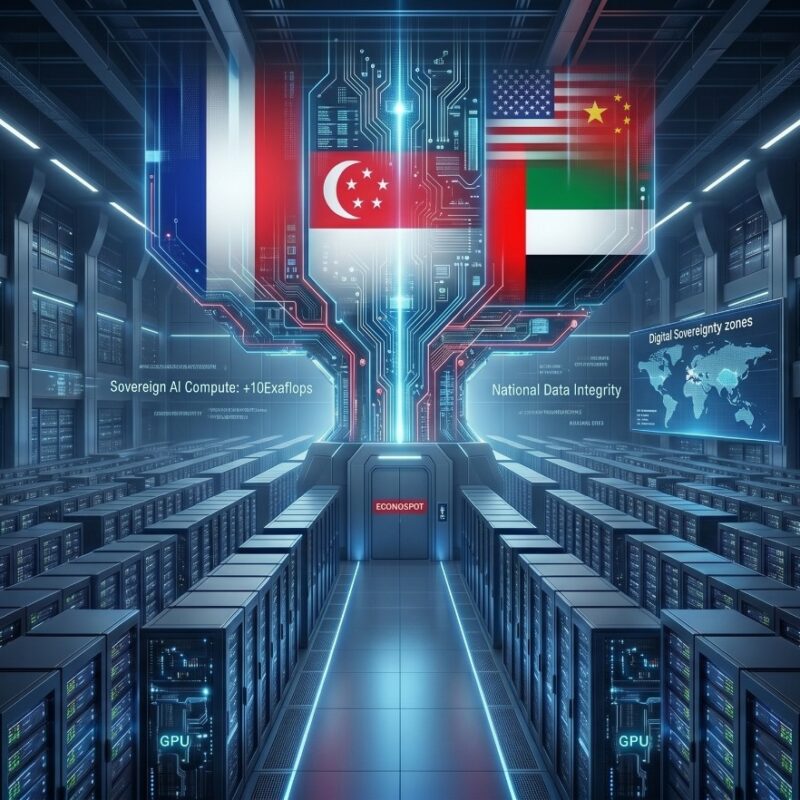
For nearly three decades following the Cold War, global politics followed a relatively predictable, unipolar script. Today, that script has been shredded. While the headlines remain dominated by the rivalry between the United States and China, the real story of 2026 is the emergence of “Middle Powers”—nations that are no longer willing to choose sides, but are instead choosing their own interests.
The Strategic Autonomy Trend
Nations such as India, Brazil, Turkey, and Saudi Arabia are exercising what diplomats call “Strategic Autonomy.” These are not small players; they are regional giants with massive economies and demographic weight. By maintaining functional relationships with both Washington and Beijing, these middle powers are acting as the new “swing voters” of global diplomacy. They are leveraging their position to secure better trade deals, technology transfers, and security guarantees.
Transaction Over Ideology
The new era of politics is profoundly transactional. The ideological blocs of the 20th century are being replaced by “ad-hoc” alliances. Today, two countries might be military partners in one region while being fierce economic rivals in another. This “multi-aligned” approach makes global diplomacy more complex and volatile, but it also provides a buffer that prevents the world from hardening into two frozen, uncommunicative camps.
The Institutional Shift
As middle powers gain confidence, they are demanding a redesign of global institutions. From the UN Security Council to the IMF, the call for “fair representation” is growing louder. The expansion of groups like the BRICS is a clear symptom of this shift. For global businesses, this means that understanding the regulatory and political landscape of these middle powers is now just as important as monitoring the policies of the traditional superpowers.
The EconoSpot Insight A multipolar world is inherently more unstable than a unipolar one, but it is also more representative of the actual distribution of global power. For EconoSpot readers, the takeaway is clear: the most important political developments of the next decade may not happen in the White House or the Great Hall of the People, but in the boardrooms and parliaments of New Delhi, Riyadh, and Jakarta.